집진기의 크기를 올바르게 지정하려면 세 가지 숫자가 필요합니다. CFM 단위의 총 공기 흐름(각 후드의 캡처 속도와 덕트 이동 속도에 따라 결정됨), 먼지 유형에 맞는 공기 대 천 비율, 대부분의 산업용 먼지에 대해 3,500~4,500FPM을 유지하는 덕트 크기입니다. 이 세 가지를 올바르게 수행하면 시스템이 10년 동안 작동됩니다. 소형 팬, 대형 비율, 처진 수평 덕트 등 하나라도 잘못되면 분기마다 필터를 교체하고 압력 강하를 추적하며 용접 베이가 안개 은행처럼 보이는 이유를 공장 관리자에게 설명하게 됩니다.
수집기가 아닌 캡처 속도로 시작하세요.
거의 모든 잘못된 집진 프로젝트는 같은 방식으로 시작됩니다. 누군가가 먼저 집진기의 크기를 정합니다. 주문이 잘못되었습니다. 팬과 필터는 후드를 제공하기 위해 존재합니다. 그 반대는 아닙니다.
포집 속도는 먼지 발생 지점에서 오염 물질을 후드로 끌어들이는 데 필요한 공기 속도입니다. ACGIH는 복음으로 다루어야 할 잘 확립된 범위를 제공합니다.
- 조용한 공기 중으로 약간의 속도로 방출됨 (light buffing, evaporation): 50–100 FPM
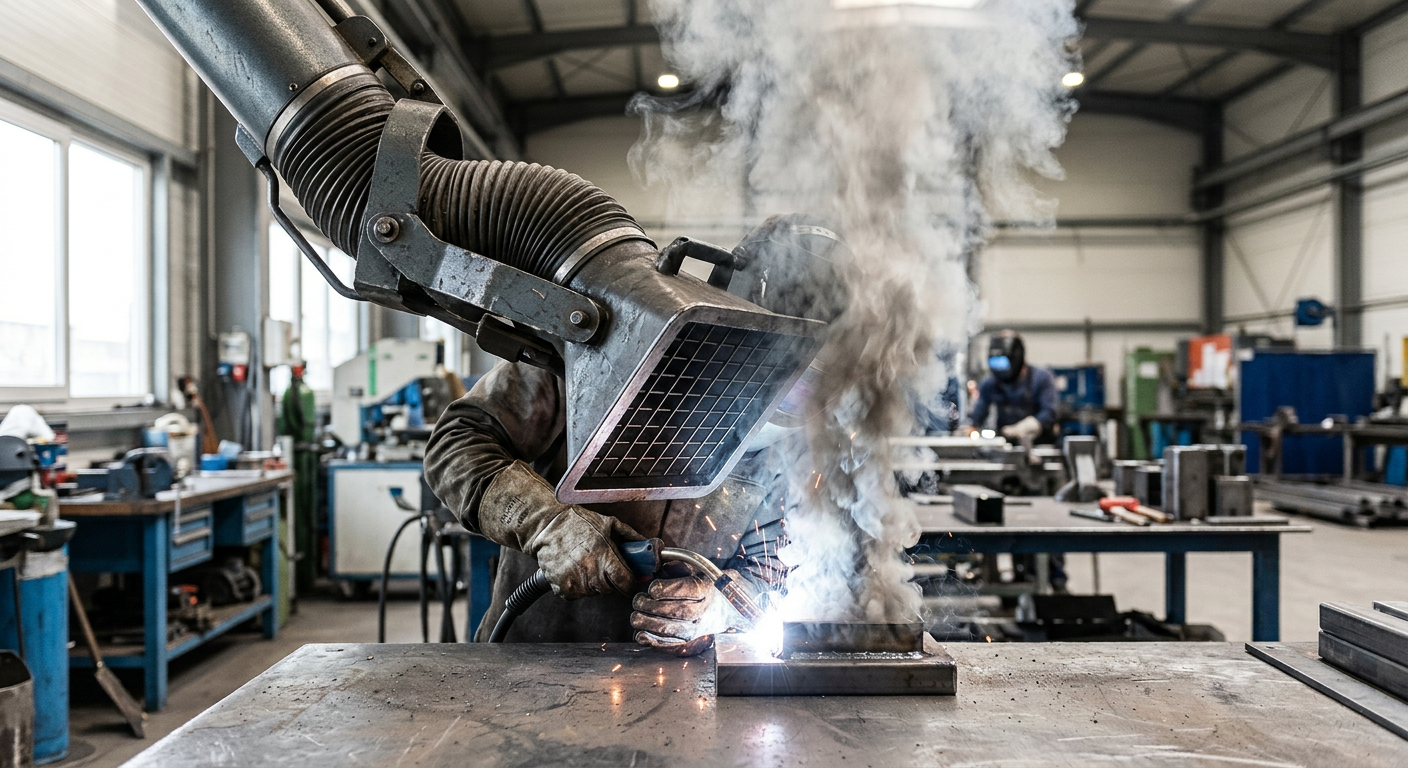
- 적당히 조용한 공기 중으로 낮은 속도로 방출 (welding, low-speed grinding, container filling): 100–200 FPM
- 빠른 공기 흐름으로의 활성 생성 (spraying, conveyor loading, crushing): 200–500 FPM
- 매우 난류가 심한 공기에 대한 높은 초기 속도 (heavy grinding, abrasive blasting, tumbling): 500–2,000 FPM
필요한 캡처 속도에 후드 앞의 가상 "제어 범위"의 단면적을 곱하면 해당 픽업에서 CFM을 얻을 수 있습니다. 표면에서 150 FPM이 필요한 24" x 18" 다운드래프트 용접 테이블이 있습니까? 이는 테이블당 3평방피트 × 150 = 450CFM입니다. 후드를 추가하고 요약하면 덕트 손실이 발생하기 전에 처리 공기 흐름이 확보됩니다.
전체 시스템 CFM 계산(자신을 속이지 않고)
대부분의 스프레드시트가 조용히 놓여 있는 곳이 바로 여기에 있습니다. 전체 시스템 CFM은 단순히 후드 CFM의 합이 아닙니다. 동시에 실행되는 분기, 누출 및 필터 로딩에 대한 안전 여유를 고려해야 합니다.
정직한 공식
전체 설계 CFM = (Σ 동시 후드 CFM) × 1.10 누출 계수 × 1.10–1.20 더티 필터 마진.
두 번째 마진이 중요합니다. 펄스 제트 카트리지 수집기는 깨끗한 필터를 사용하여 정격 CFM을 약 1"w.g.의 저항으로 끌어당깁니다. 수명이 다한 로딩 시에는 6"w.g.에 있을 수 있습니다. — 팬 곡선은 더 높은 정압에서 공기 흐름을 떨어뜨립니다. 깨끗한 필터 조건에서 팬 크기를 정확히 조정했다면 6개월까지 사양에 따라 20% 미만으로 작동하게 됩니다.
실제 사례
한 제조 공장에서는 5개의 로봇 용접 셀(각각 800CFM)과 2개의 수동 연삭 부스(각각 1,200CFM)를 운영하고 있습니다. 7개 모두 동시에 실행됩니다. 순진한 합계: 6,400 CFM. 계수 포함: 6,400 × 1.10 × 1.15 ≒ 8,100 CFM. 그것은 수학 브로셔에서 제공한 6,400개가 아니라 실제로 사양에 필요한 팬입니다. 용도별로 적합한 장치를 선택하는 방법에 대해 자세히 알아보려면 집진 장비 선택의 핵심 요소에 대한 가이드를 참조하세요.
공기 대 옷감 비율: 모두가 잘못 알고 있는 숫자
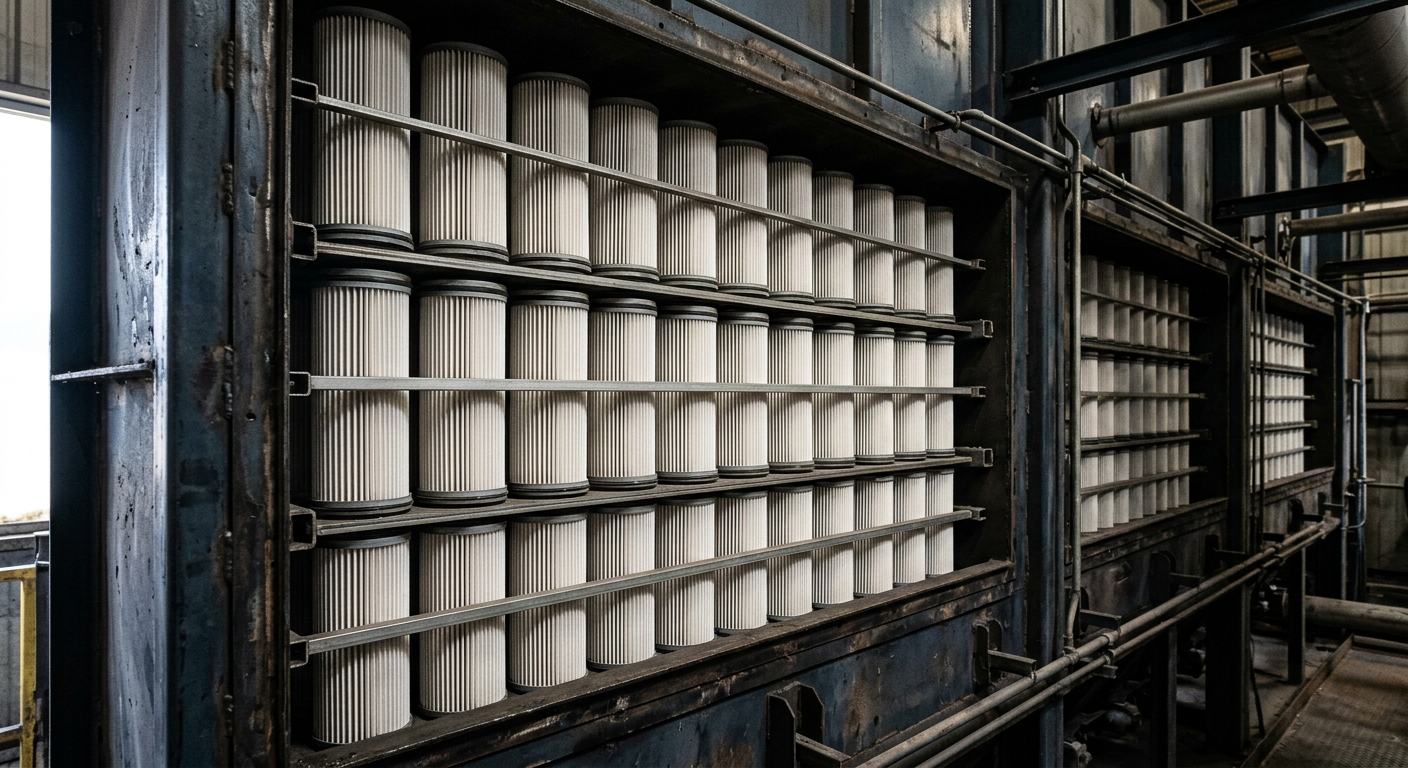
공기 대 천 비율(A/C)은 CFM을 총 필터 매체 면적(평방피트)으로 나눈 값입니다. 단위는 FPM이지만 "직물을 통해 공기를 얼마나 세게 밀어내는지"로 생각하십시오. 너무 세게 밀면 미디어가 눈에 띄지 않게 되고 먼지 덩어리가 조기에 제거되며 차압이 상승하는 것을 볼 수 있습니다.
먼지 유형별 권장 비율
- 펄스 제트 카트리지, 미세 연기(용접, 레이저 절단, 플라즈마): 1.5–2.0:1
- 펄스젯 카트리지, 일반적인 불쾌한 먼지: 2.0–2.5:1
- 펄스 제트 백하우스, 무거운 입상(목재, 곡물): 4.0–6.0:1
- 역방향 공기 백하우스, 끈적이거나 흡습성: 1.5–2.0:1
- 셰이커 백하우스: 1.5–2.5:1
일반적인 벤더 트릭: 펄스 사이클 동안 청소되는 필터를 제외하면서 순 A/C를 인용하는 것입니다. 한 번에 한 줄씩 펄스를 발생시키는 6줄 카트리지 장치에서 순 여과 면적은 총의 5/6입니다. 조정하지 않으면 생각보다 20% 더 열심히 달리고 있는 것입니다.
빠른 작업 예
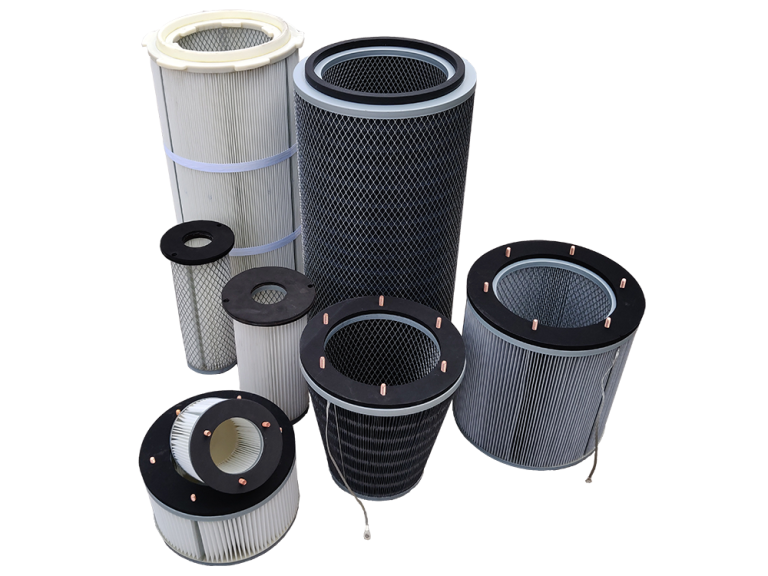
용접 흄에는 8,100 CFM이 필요합니다. 1.8:1의 목표 A/C는 8,100 ¼ 1.8 = 4,500평방피트의 망포를 의미합니다. 카트리지당 226평방피트(일반적인 26" 나노 섬유)를 사용하면 순 카트리지 4,500 ¼ 226 ≒ 20개 또는 4개 중 한 행을 펄스하는 경우 총 24개가 됩니다. 반올림합니다. 절대 아래로 내리지 마세요.
덕트 공사: 운송 속도는 협상할 수 없습니다.
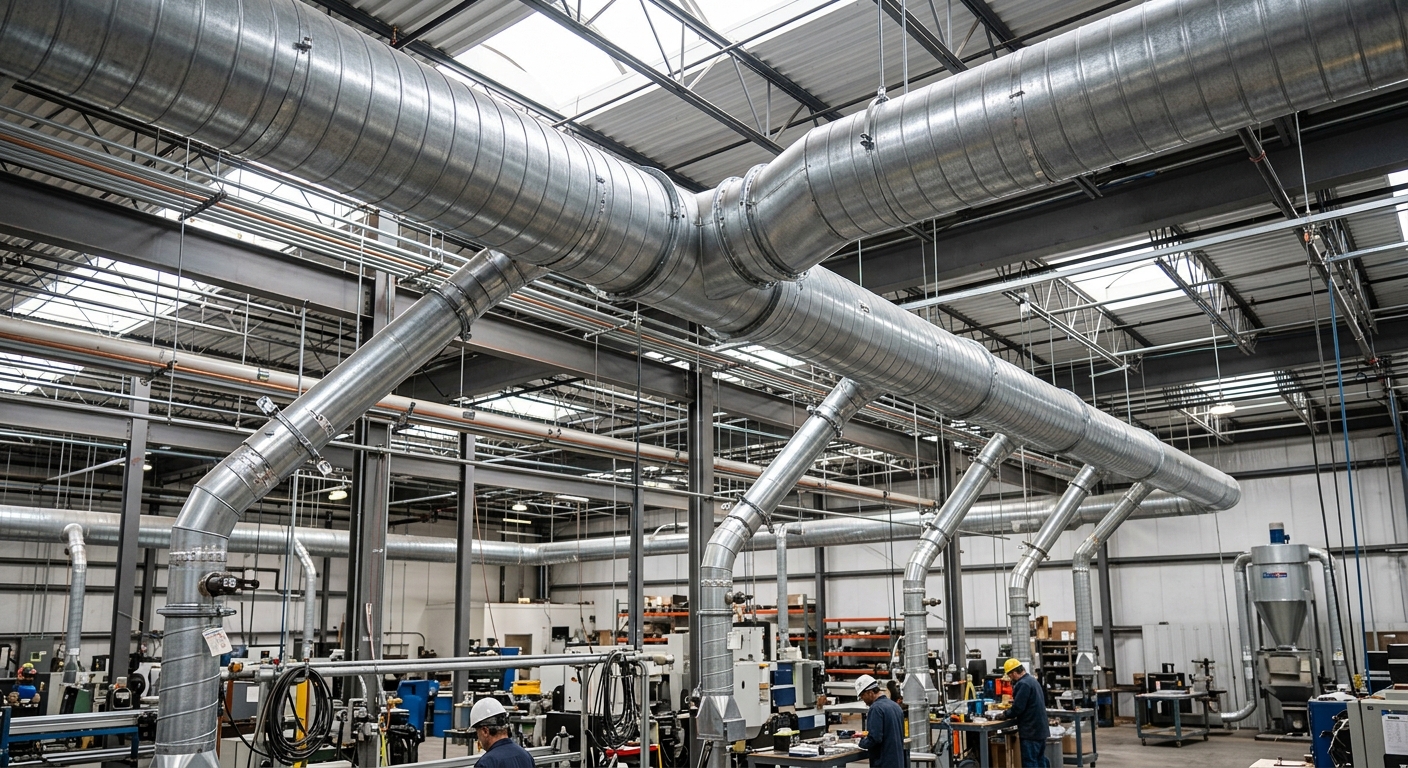
완벽한 수집기의 크기를 정하더라도 덕트 때문에 실패할 수 있습니다. 공기가 느려지면 먼지가 침전됩니다. 기간. 각 재료에는 입자가 떨어지고 수평으로 축적되어 결국 시스템을 질식시키거나 가연성 먼지로 인해 연료원이 되는 최소 운송 속도가 있습니다.
최소 운송 속도
- 증기, 가스, 연기: 1,000–2,000 FPM
- 매우 미세한 가벼운 먼지 (cotton lint, wood flour): 2,500–3,000 FPM
- 미세 건조 먼지 (fine rubber, jute lint, buffing): 3,000–4,000 FPM
- 평균 산업 먼지 (grinding, coffee, granite, brick cutting): 3,500–4,500 FPM
- 심한 먼지 (sawdust, metal turnings, lead, cement): 4,500–5,500 FPM
- 무겁거나 촉촉한: 5,500 FPM and up
직사각형이 아닌 원형 덕트입니다. 긴 반경 엘보(중심선 반경 ≥ 1.5× 직경), 연귀되지 않음. 90°가 아닌 30° 측면 입구. 이것은 선호도가 아닙니다. 균형을 이루는 시스템과 울부짖고 막히는 시스템의 차이입니다.
신인들이 성공하는 곳
"정전기를 낮게 유지하기 위해" 메인을 너무 크게 만들면 속도가 떨어지고 먼지가 떨어지며 덕트가 막힙니다. 3,500CFM을 운반하는 12인치 메인은 4,456FPM으로 작동합니다. 괜찮습니다. "향후 확장"을 위해 14인치로 높이면 3,275FPM이 됩니다. 이는 대부분의 금속 연삭 먼지의 이동 속도보다 낮습니다. 6개월 후 수평으로 200파운드의 벌금이 부과됩니다.
정압: 팬을 설정하는 숫자
CFM은 팬 크기를 알려줍니다. 정압(SP)은 팬 마력을 나타냅니다. 총 시스템 SP는 다음의 합계입니다.
- 후드 진입 손실(후드 디자인에 따라 다름 - 0.25~1.75VP)
- 가속 손실(1.0 속도 압력)
- 직선 덕트 마찰(SP/100피트 테이블 또는 Darcy 방정식 사용)
- 피팅 손실(엘보우, 입구, 전환 - 손실 계수 × VP로 표시)
- 필터 저항성, 깨끗함 및 더러운 것(일반적으로 카트리지의 경우 w.g. 1" clean, w.g. dirty 6")
- 스택 또는 방전 손실
모두 더해보세요. 일반적인 중소형 금속 가공 집진 시스템의 크기는 8"에서 14" 사이입니다. 총 SP. 클린 수치가 아닌 CFM 및 더티 필터 SP의 설계 곡선에서 팬을 선택하세요. 깨끗한 면에는 뒤로 기울어지거나 방사형 팁 휠을 선택하고, 팬이 더러운 면에 있으면 방사형 블레이드를 선택합니다(드물지만 일부 사전 분리기 설정에서 발생함).
실제 사례: 막힌 Woodshop 시스템 크기 조정
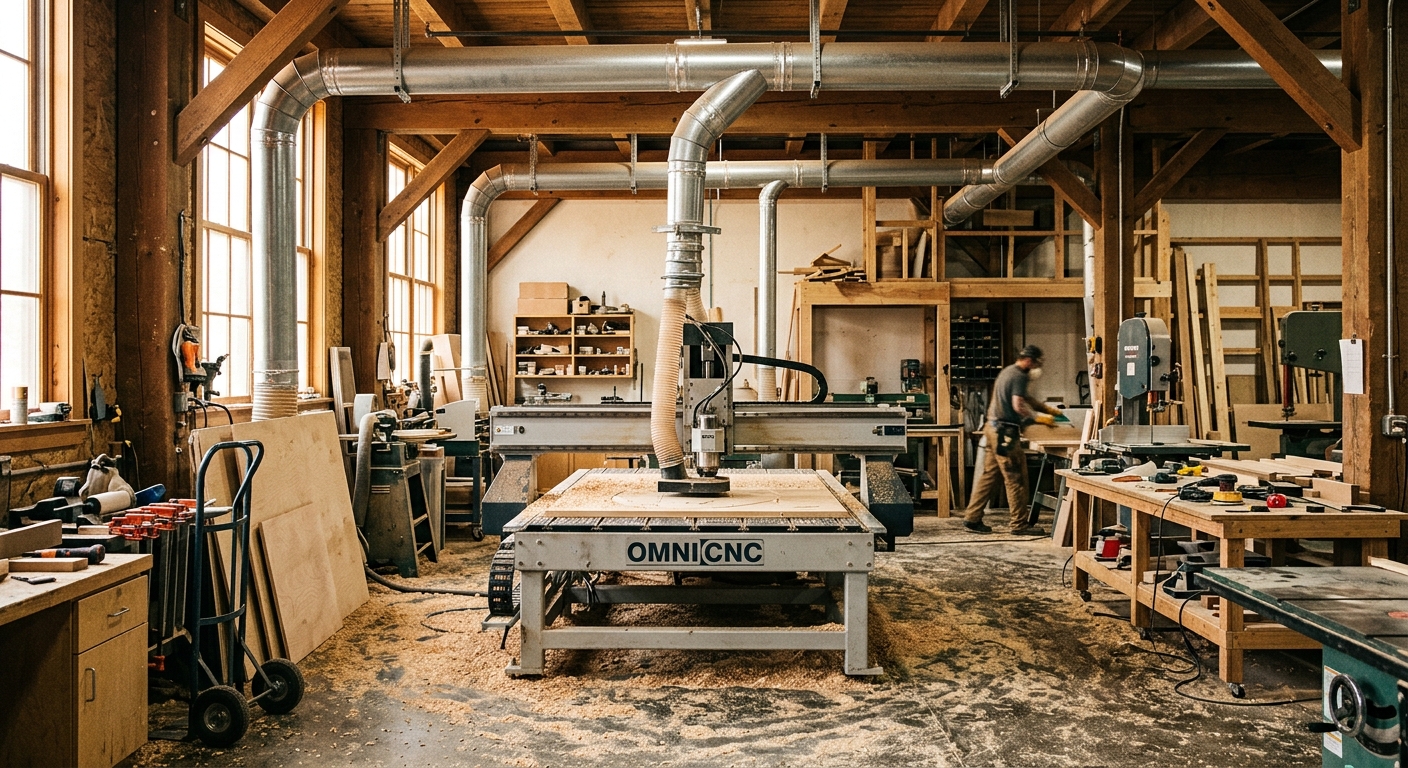
14개 장비를 갖춘 캐비닛 상점에서 기존 7.5 HP 수집기가 "예전처럼 당기지 않는다"는 이유로 우리에게 전화했습니다. 고객은 임펠러가 마모되었다고 가정했습니다. 실제 문제(영향 순):
- 원래 설계에서는 동시성만 50%로 가정하여 후드 CFM을 통합했습니다. 상점이 성장하여 이제는 한 번에 11대의 기계를 운영하게 되었습니다.
- 8인치 메인은 새로운 CNC 라우터에 도달하기 위해 두 개의 90° 연귀 엘보로 확장되었습니다. 속도는 4,200FPM에서 약 3,400FPM으로 떨어졌고 조립 영역 위의 수평 방향에 톱밥이 쌓였습니다.
- 백 필터의 A/C 비율은 4.8:1이었습니다. 원래 부하에는 괜찮았지만 현재는 더 미세한 MDF 먼지가 지배적이므로 눈이 멀게 하는 가속 및 더티 필터 SP가 9" w.g.까지 올라갔습니다.
해결 방법: 팬을 8,200 CFM 및 12" SP에서 15 HP로 대형화하고, 긴 반경 엘보우를 사용하여 메인을 10"로 재구축하고, 백 영역을 추가하여 A/C를 3.5:1로 낮추고, 트렁크를 두 개의 균형 잡힌 가지로 나눕니다. 총 먼지 포집 성능은 간헐적 수준에서 사양 수준으로 향상되었으며 필터 수명은 3배로 늘어났습니다. 교훈: 시스템이 "약해지면" 팬은 일반적으로 괜찮습니다. 즉, 설계 가정이 표류했습니다. 이 수정 범주에 대한 자세한 내용을 보려면 상위 4가지 먼지 수집 시스템 유형에 대한 분석을 참조하는 것이 유용한 출발점입니다.
특수 사례: 가연성, 흡습성 및 미세 연기
표준 테이블은 80%의 방법을 제공합니다. 나머지 20%는 시스템이 폭발하는 곳입니다. 때로는 문자 그대로입니다.
가연성 먼지(Kst > 0)
먼지에 Kst 값이 있는 경우 NFPA 652/660이 적용됩니다. 크기 조정에는 폭발 환기 또는 억제, 덕트의 격리 밸브, 폭연을 견디거나 완화하도록 설계된 덕트가 포함되어야 합니다. 농도를 최소 폭발 농도(MEC)(일반적으로 작업 한계로 MEC의 25%) 미만으로 유지하려면 운송 속도를 높여야 하는 경우가 많습니다. 곡물 취급자는 이러한 고통을 잘 알고 있습니다. 곡물 처리 시설의 먼지 재해 완화에서 이에 대해 다루었습니다.
흡습성 또는 끈적끈적한 먼지
설탕, 소금, 일부 제약 API. A/C 비율을 적극적으로 낮추십시오. 1.2~1.5:1은 드문 일이 아닙니다. 결로를 방지하기 위해 덕트를 외부에서 단열하십시오. PTFE 멤브레인 매체를 고려하십시오. 백하우스에서 뭉쳐진 흡습성 먼지를 청소하는 것은 누구도 두 번 원하지 않는 일입니다.
서브미크론 흄
레이저, 플라즈마, 리튬 배터리 전극 먼지. 나노 섬유 표면 로딩 및 HEPA 애프터 필터가 있는 카트리지. 리튬 배터리 생산 시 분진 수집 및 제약 GMP 분진 수집에 대한 심층 분석을 참조하여 봉쇄에 대한 자세한 내용을 알아보세요.
실제로 사용할 수 있는 크기 조정 체크리스트
PO에 서명하기 전에 다음 사항을 검토하세요.
- 전체 수치를 가정하지 않고 모든 후드에서 포획 속도를 측정하거나 추정했습니까?
- 동시성을 올바르고 정직하게 적용했습니까?
- CFM에 누출(10%) 및 더티 필터(15~20%) 마진을 추가했습니까?
- Is the A/C ratio appropriate for your dust type and quoted as 그물, not gross?
- 모든 덕트 분기가 특정 먼지에 대한 최소 운송 속도보다 높습니까?
- 긴 반경의 팔꿈치? 30° 항목? 둥근 덕트? 균형 잡힌 트렁크?
- 깨끗한 필터가 아닌 더티 필터 SP에 맞춰 팬 크기를 조정했나요?
- 가연성인 경우 설계가 격리 및 환기 규정을 준수합니까?
- 합리적인 필터 모니터링 전략(DP 게이지 최소, 이상적으로는 로깅 포함)이 있습니까?
모든 상자를 선택하십시오. 하나를 건너뛰는 것은 18개월 후에 화가 난 전화 통화로 표면화되는 경향이 있습니다.
처음부터 올바른 숫자를 얻으세요
집진기의 크기를 결정하는 것은 마술이 아닙니다. 이는 협상할 수 없는 몇 가지 규칙이 있는 산술입니다. 후드에서 시작하여 바깥쪽으로 작업하고, 이동 속도를 존중하고, 필터 매체에 숨 쉴 수 있는 공간을 제공하고, 깨끗한 필터 조건에 대해 팬을 지정하지 마십시오. 그렇게 하면 시스템이 작업 배경으로 사라지게 됩니다. 이것이 바로 좋은 먼지 수집이 수행해야 하는 작업입니다.
계산을 직접 처리하고 싶지 않거나 강철을 절단하기 전에 설계를 다시 살펴보고 싶다면 villotech의 엔지니어링 팀이 매주 용접, 제약, 배터리, 목공, 곡물 전반에 걸쳐 이와 같은 시스템 크기를 조정합니다. 장비 목록과 먼지 데이터를 보내주시면 고객이 도전할 수 있도록 가정된 CFM, A/C 및 덕트 일정을 알려드립니다.